

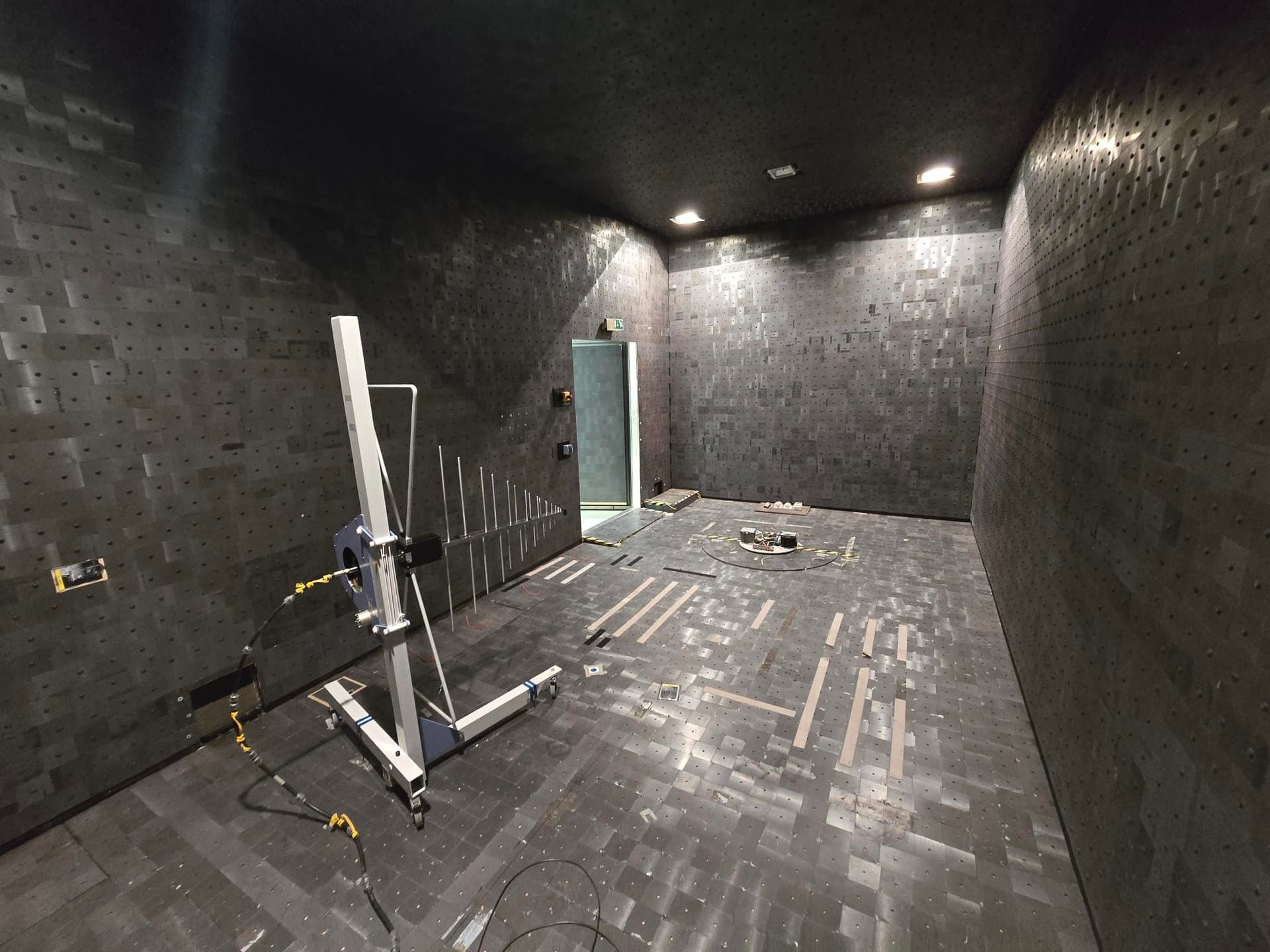
Fully anechoic chamber, Harbke
Test environment up to 10 GHz
- up to 10 GHz
- up to 3 m
- 4 × 4 × 8 m (H × W × L)
- 0–60 V, up to 10 A
- three-phase, up to 32 A
- approximately 22 kVA
We measure during development, put the results into technical context and work on the causes with you – so that EMC topics do not surface shortly before the design freeze.
The situation
In many projects, EMC is only tested at the end. By then the boards are manufactured, the enclosure tooling is ordered and dates have been promised – every change reaches deep into the product.
If a limit is exceeded at that stage, only expensive routes remain: retrofitted filters, additional shielding, layout changes or a postponed market launch. Often parts get swapped on suspicion, because the cause is unclear.
What separates pre-compliance measurements from an accredited test – in purpose, not in diligence – is explained in What is pre-compliance testing?
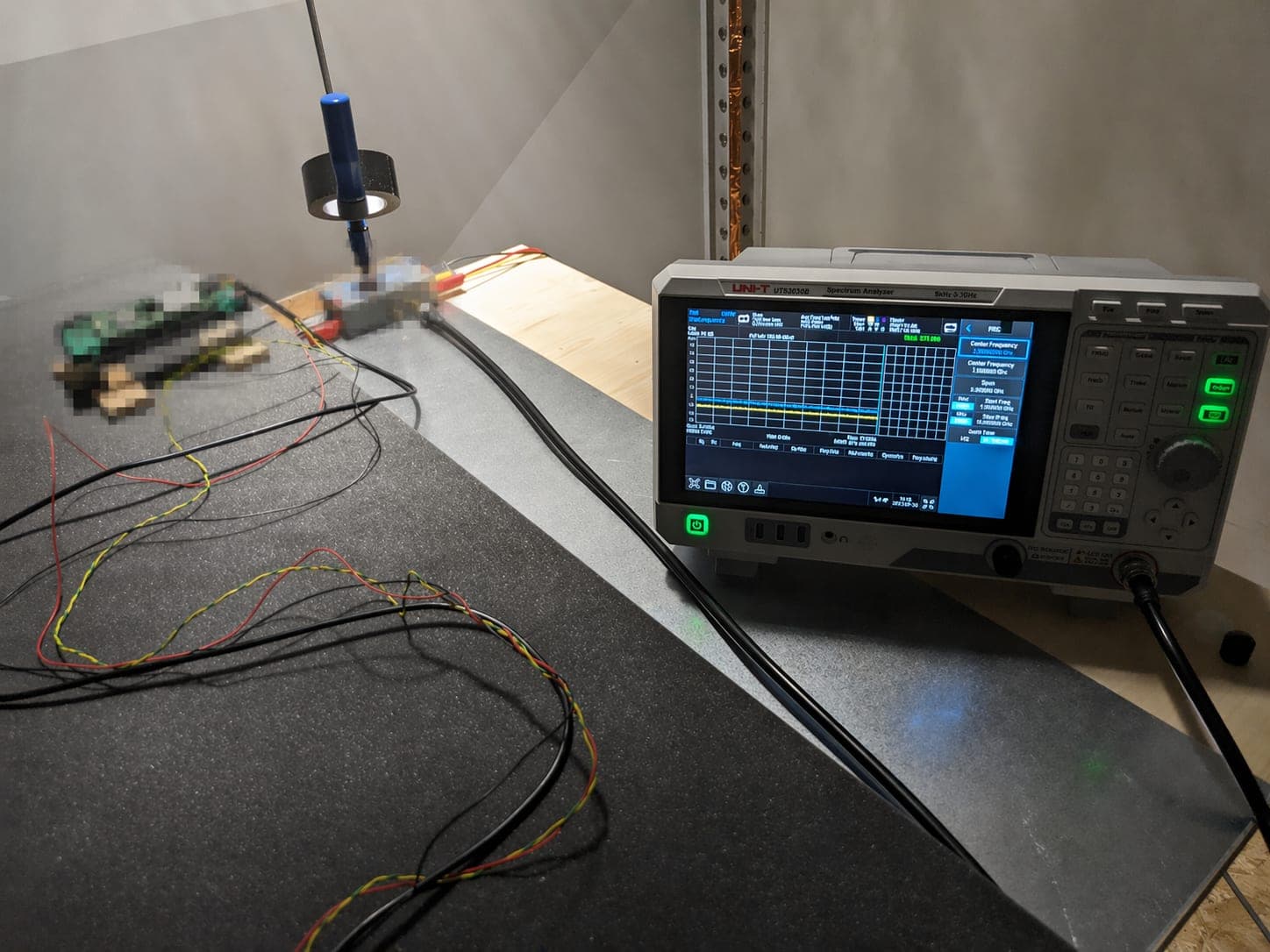
How we work
Four steps, repeated as often as development requires. Consulting is part of the work, not a separate add-on.
Measurement in the test centre that fits, with documented setup and operating states.
Narrow the interference source down to the board, a cable, a connector or an opening in the enclosure.
Derive concrete measures and estimate the effort and the expected effect.
Verify and document the effect under identical conditions.
After the measurement
We agree scope and depth of assessment per project – depending on product, target market and development stage. The following elements are the rule.
Preparation
The more complete this information is, the more focused the measurement day will be. Whatever is missing, we clarify together beforehand.
Depending on the question, we measure in the fully anechoic chamber in Harbke or in the shielded chamber in Meine.
Test environment up to 10 GHz
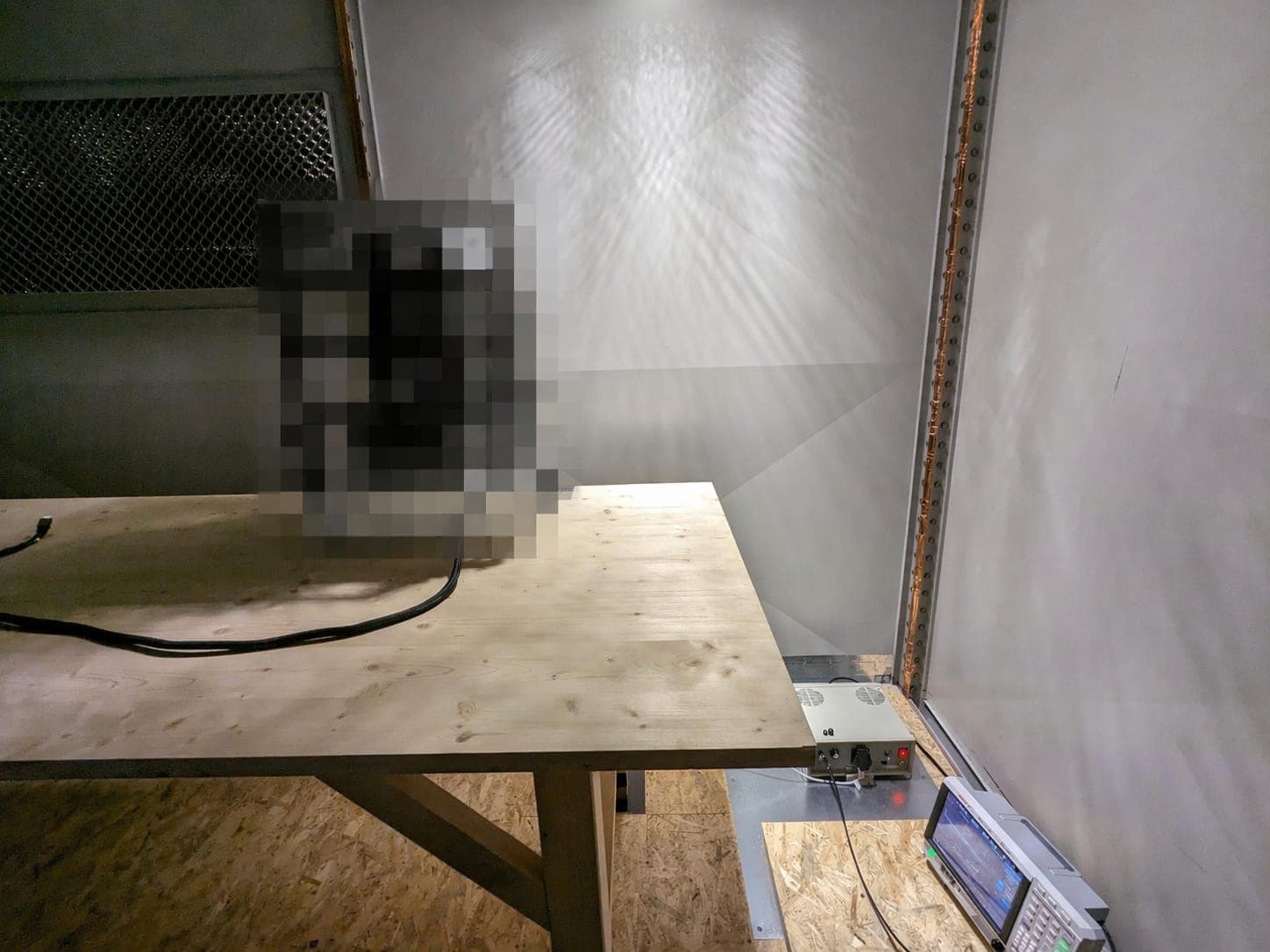
Complementary shielded test environment
You will receive a prompt response on the most suitable measurement option.